
Minneapolis
An essay on love and loss, and the reality of a moment


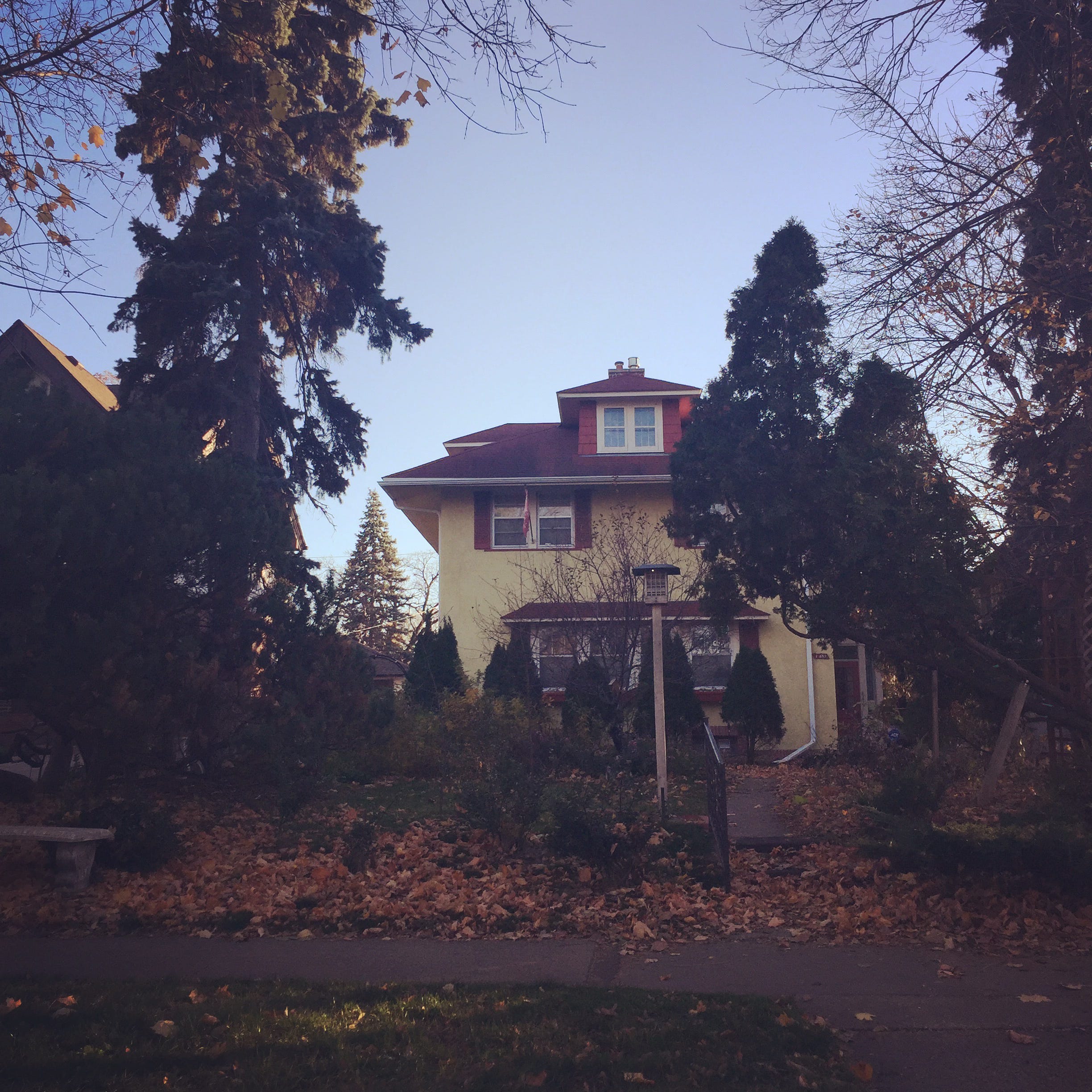
I’m carrying very big feelings about what is happening in Minnesota right now - the kind of feelings that don’t fit neatly into social media posts or polite conversation. Anxiety, fear, grief, anger, and a deep sense of loss for a place that is not just familiar to me, but formative.
Some of you know that I was born in St. Paul - the “other” city of the Twin Cities. I went to school in Minneapolis until high school, returned to St. Paul for those years, and then came back to Minneapolis to complete my undergraduate degree at the University of Minnesota.
Minneapolis is my home, even now. I still think of it that way, even though I left nearly eight years ago. That sense of belonging doesn’t disappear just because your address changes. I still remember the sinking feelings of watching my city burn on national television in 2020 after the murder of George Floyd.
I also still have very real roots there. I work for a Minnesota-based company, and through the 8 years in Portland have still had clients in MN frequently. These are not metrics I share to signal importance, instead to demonstrate the reality of how my professional life and my personal history remain intertwined with that community. I’m still paying attention to who in my network has gotten a new job, or started a family. I still deeply care and feel a connection to that place.
Right now, I’m struggling to process the magnitude of what is unfolding in a place I love.
I’ve been trying to figure out how to write this, where and how to begin, what to say, what not to say. How to acknowledge what’s happening without turning it into spectacle or flattening it into talking points or centering myself instead of the people being victimized daily. This entire situation feels unfathomable to me. Dystopian doesn’t even begin to cover it.
I live in Portland now, and in recent months our city has also faced moments of tension involving federal presence and the threat or deployment of the National Guard. There have been protests at our ICE facilities, and small skirmishes, but nothing of the magnitude of what Chicago and Minneapolis have been managing. Those moments were unsettling and complicated, but not overtly violent. When the National Guard was sent in on a few short occasions, many of the men and women in uniform here were measured, restrained, and frankly sometimes as confused as the citizenry they were tasked with “watching.” The situation was uncomfortable, sometimes tense, but it did not feel designed to provoke harm.
This is different.
What is happening in Minneapolis does not feel like an effort to protect people or keep communities safe. The forces descending on the city are not there to stabilize — they are there to intimidate, to provoke, to dis-regulate. They appear uninterested in de-escalation or care, and deeply invested in fear. To what end, I can’t say with certainty, but it is difficult not to suspect that the goal is reaction — to push people past their limits in order to justify further escalation, further violence, further harm. Nicole Good lost her life, and at the writing of this, several more have been critically harmed.
This is not rhetoric. This is not an exaggeration. This is a life lost, children hospitalized, people harmed while simply trying to exist in their own neighborhoods. I want to be unequivocal here: I condemn what is happening. I condemn the use of lethal force against civilians. I condemn tactics that endanger families, escalate fear, disrupt daily life, and treat neighborhoods like battlefields. I condemn the idea that terrorizing a city is an acceptable method of enforcement. What’s most disturbing isn’t simply that violence has occurred, but that the premise used to justify this federal surge feels overstated and propagandistic — an operation framed as targeting criminal elements, yet deployed in ways that have brought harm to ordinary people, frightened children, and upended community life. The narrative that Minneapolis was a space of dangerous lawlessness needing this level of force has been challenged not just by local leaders and activists, but by residents themselves — many of whom were simply observing, documenting, or trying to protect each other when they were met with militarized responses rather than protection.
Minnesotans are not new to protest. They are not new to advocacy, to mutual aid, to harm reduction, or to standing up for one another. This is a community that knows how to organize and how to care. And still — we are human. There is a limit to how much intimidation, surveillance, and threat any group of people can absorb before the instinct to protect oneself and one’s neighbors takes over.
What scares me most is what feels like a calculated flooding of Minneapolis with under-trained, heavily armed, and ideologically hostile forces — people who do not know the neighborhoods, do not know the history, and do not care who gets hurt in the process. People whose presence seems designed not to keep the peace, but to push already-raw nervous systems past their breaking point.
I hope every day for cooler heads to prevail. I want restraint. I want safety for everyone. And I’m also painfully aware of how hollow those words can sound when restraint is demanded of communities under siege, while not being modeled by those in power.
There is no neutral ground here. Not because neutrality is inherently immoral, but because pretending this is an abstract policy debate erases the lived reality of people who are being actively harmed. At the same time, I am not interested in turning this moment into a battleground for online fights. I don’t believe most people are changed by being shouted at, and I refuse to weaponize grief for engagement or performance.
What I believe in is naming what feels true without demanding agreement. Condemning harm without inflaming chaos. Holding fear without turning it into fear-mongering. Allowing sorrow, anger, and love for a place to coexist without rushing toward resolution where none yet exists.
For years (over a decade now) I’ve was told that I was overreacting. That my concerns were exaggerated, that my fear was misplaced, that what I was noticing wasn’t really happening or wasn’t as serious as it seemed. I was told to calm down, to be more reasonable, to stop imagining worst-case scenarios. I wish, deeply, that those voices had been right. I wish this were all an overreaction. But watching what is unfolding now, it’s impossible not to see that this kind of abuse of power didn’t appear overnight. It was either ignored, minimized, or dismissed for years. And if people didn’t see it coming, it wasn’t because the signs weren’t there, it was because they chose not to look, or believed themselves insulated from harm.
And I want to say this plainly: those of us outside Minneapolis are watching. We see what is happening. We know this is not “over there” — that what unfolds in one city can happen in others. The trauma of living in what suddenly feels like a war zone is real and terrifying, and it doesn’t stay neatly contained within city limits.
If you are in Minneapolis right now — or have family, history, or heart there — you are not alone. Many of us are holding you in mind, holding space, and grappling with the same fear and disbelief. If you need to talk, to process, to simply be witnessed without debate or dismissal, reach out. Let’s care for one another without turning pain into a contest or a spectacle.
Minneapolis is my home. It deserves care, dignity, and protection, not chaos. And for now, the most honest thing I can offer is my witness, my refusal to look away, and my commitment to naming harm when I see it.
We are allowed to feel devastated. We are allowed to feel scared. We are allowed to feel outraged. We are allowed to grieve what has already been lost and fear what might come next because these are real losses. These are not abstractions.
And if you want to talk about it, to sit in that space of shared shock and vulnerability, to hold each other up without turning this into a competition over who’s right or wrong — reach out.
Let’s hold space for each other’s emotions without weaponizing them. Let’s acknowledge trauma when we see it, without dancing around it. Let’s remember that cities are not just places on a map — they are homes, communities, histories, and the people who make them.
Minneapolis is in pain. And for all who have ever called it home, that pain matters.
Looking for resources to support? https://www.standwithminnesota.com
 | A guest post by
|